AJS Furniture AJS Furniture

How to Choose the Most Durable Finish for Interior Doors

Time:2026-11-26 Author:Mason
0%

A door takes more contact than its quiet appearance suggests. Hands brush its edges, keys graze the surface, and cleaning cloths revisit the same spots. So, What is the most durable finish for interior doors? There is no single answer for every home. A properly applied, high-performance two-part polyurethane or conversion varnish can provide strong resistance to scratches, moisture, and household cleaners. Yet surface preparation, coating thickness, and curing matter just as much. A premium finish applied poorly may fail at the handle first.

Wood-finishing expert Bob Flexner, author of Understanding Wood Finishing, is often associated with the practical maxim, “There are no bad finishes, only bad finishers.” The wording is a useful reminder, though it should not replace product specifications or a finish manufacturer’s instructions. For a busy hallway, look for a coating rated for interior woodwork and repeated handling. Check its recoat time, cure time, and repair requirements. A waterborne polyurethane may suit a lighter-colored door, while some oil-modified products deepen the wood’s color. Always test a small, hidden area. The result can surprise you. This guide compares durable options, explains their trade-offs, and considers how preparation and daily use affect the finish over time. One detail is easy to miss: the toughest coating is not always the easiest to touch up.
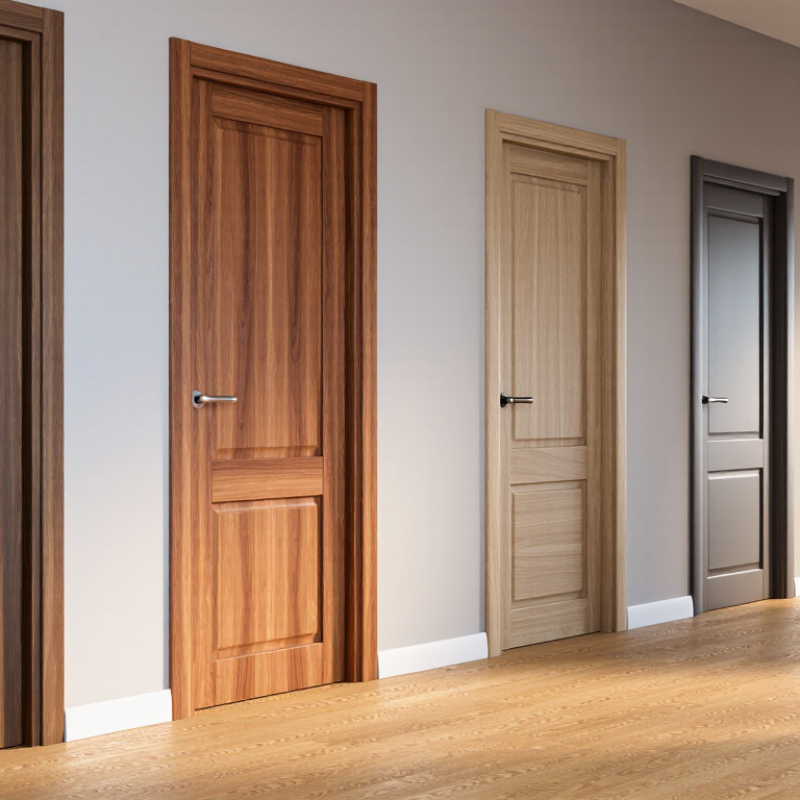
How to Choose the Most Durable Finish for Interior Doors

Define Door Exposure by Traffic, Moisture, and Cleaning Frequency

Before choosing a finish, map how each interior door is used. Count daily passes, not just the room’s purpose. A hallway door may be touched dozens of times, while a guest-room door stays closed for days. Look for hand marks near the latch, scuffs along the lower edge, and objects that repeatedly bump the surface. These details reveal where a finish needs extra abrasion resistance. Small signs matter.

Moisture and cleaning habits change the picture. Bathroom doors face humid air and occasional splashes, especially near the bottom edge; a durable coating helps, but it cannot correct poor ventilation or unsealed edges. Kitchen and utility-room doors may need frequent wiping. If you use damp cloths or household cleaners every week, choose a finish that tolerates regular cleaning, and follow its care instructions. Abrasive pads can dull even a hard surface. It is easy to overestimate how carefully a busy household will treat a door. Be realistic. A low-traffic closet door may not need the same level of protection as a bathroom door beside a shower. Check the door’s material and finish guidance before selecting a coating, since compatibility affects adhesion and wear.

Compare Acrylic, Alkyd Enamel, and Two-Component Polyurethane Finishes

A durable interior-door finish starts with the right match for the room and the door’s condition. Acrylic enamel is water-based, cleans up easily, and usually has lower odor during application. It dries quickly. That helps when a hallway door cannot stay off its hinges for long. However, dry-to-touch does not mean fully cured; check the product instructions before washing or closing a freshly painted door.

Alkyd enamel often levels well, leaving fewer visible brush marks on flat panels. Once cured, it can stand up to frequent handling and routine cleaning. The trade-offs are longer drying times and possible yellowing, especially in areas with limited daylight. A door may feel dry while its edges still stick to the frame. Leave enough clearance, and avoid stacking coats too heavily.

Two-component polyurethane can provide excellent resistance to scratches, moisture, and cleaning, making it worth considering for heavily used doors. Its application is less forgiving: mixing ratios, working time, surface preparation, and ventilation all matter. It may also be harder to touch up invisibly if the finish gets chipped. For an ordinary bedroom door, that extra toughness may not justify the added effort. Test the chosen finish on a small area, and compare its cured performance—not just its label claims—against the wear the door actually gets.

Assess Adhesion with ASTM D3359’s 0B–5B Rating Scale

Interior doors take daily knocks from bags, fingers, and cleaning cloths. A durable finish needs strong adhesion, not just a hard, glossy surface. ASTM International’s D3359 standard rates coating adhesion from 0B to 5B using a tape test. In the scale, 5B means no coating is removed; 4B indicates less than 5% removal; and 3B indicates 5%–15%. Lower ratings signal greater coating loss: 2B is 15%–35%, 1B is 35%–65%, and 0B is over 65% (ASTM D3359). Small differences matter.

Test a sample finished like the door, allowing the coating to cure as directed. Use the applicable ASTM test method, cutter, and tape; inconsistent cuts or tape pressure can skew results. A 5B result is a useful sign, not a guarantee of years without wear. The test measures adhesion under specific conditions, not resistance to every scratch, cleaner, or door slam. I’d compare finishes on matching wood or primed panels, though replicating a real doorway perfectly is tricky.

Tips: Keep a labeled offcut for testing. Record the finish, cure time, and rating. If edges lift or squares peel, improve surface preparation or application, then retest before finishing the whole door.

How to Choose the Most Durable Finish for Interior Doors

ASTM D3359 adhesion ratings range from 0B (poorest adhesion) to 5B (best adhesion).

How to use this chart: A higher rating indicates better adhesion in the test. The ratings are ordinal categories, not equal measures of performance. ASTM D3359 assesses coating adhesion, so use it alongside wear, scratch, and moisture testing when comparing interior-door finishes. Results depend on the test method, coating, and substrate.

Compare Abrasion and Chemical Resistance Using ASTM D4060 and D1308

Choosing a durable interior-door finish takes more than judging a sample by its shine. ASTM D4060 uses a Taber Abraser to wear a coated test panel with rotating abrasive wheels. Record weight loss after a specified number of cycles; lower loss can indicate better abrasion resistance under those test conditions. Keep the substrate, coating thickness, cure time, wheel type, and load consistent. Otherwise, the comparison may say more about test setup than finish quality. Small details matter. A door’s edges and raised panels may wear differently from a flat sample, so inspect those areas in real use, too.

ASTM D1308 evaluates how coatings respond to chemical contact, often through spot tests with household substances. Apply each chosen liquid for the same duration, then check for softening, staining, gloss change, or blistering. Test substances should reflect likely exposure, such as hand lotion near a frequently touched panel or cleaner used during routine care. Not a perfect simulation. A brief spot test cannot reproduce years of wiping, and results depend on exposure time and evaluation method. Set acceptance criteria before testing, such as no visible stain and no tackiness after recovery. Record observations and repeat tests when results look inconsistent; a little uncertainty is worth acknowledging rather than hiding.

Evaluate Gloss at ASTM D523’s 20°, 60°, and 85° Angles

ASTM D523 measures how much light a surface reflects at 20°, 60°, and 85°. The 60° reading is the usual starting point for comparing door finishes. If it reads above about 70 gloss units, the 20° angle can better distinguish high-gloss surfaces. For very matte finishes below about 10 units at 60°, the 85° angle helps show small differences. Check the instrument’s instructions and record the angle with every reading. Gloss numbers from different angles are not interchangeable.

A higher reading does not mean a tougher finish. It describes appearance, not resistance to scratches, cleaning, or impact. I would compare gloss alongside product test data and a sample finished like the actual door. Look closely near the handle. That area gets frequent contact. On a molded or paneled door, readings can vary between flat sections and edges, so use consistent, flat locations. Lighting matters, too: a glossy surface may reveal fingerprints and scuffs more clearly, even when its coating holds up well. I once treated a smooth-looking sample as a durability clue; that was a weak assumption. Check adhesion and abrasion performance separately, and consider how visible wear will look in the room’s everyday light.

FAQS

How should I assess an interior door’s daily wear?

Count daily passes and inspect the latch area, lower edge, and spots where bags or furniture make contact. Small marks matter.

Do bathroom doors need a more durable finish?

Often, yes. Humid air and splashes can affect the lower edge. A durable coating helps, but it cannot fix poor ventilation or unsealed edges.

What finish suits doors that need frequent cleaning?

Choose a coating that tolerates your cleaning routine, and follow its care instructions. Abrasive pads can dull a hard surface, too.

What does a 5B adhesion rating mean?

In the tape test, 5B means no coating was removed. Lower ratings indicate more coating loss.

How can I check a finish’s adhesion before coating a whole door?

Test a matching sample after the stated curing time. Keep a labeled offcut and record the finish, cure time, and result. It is not a perfect doorway replica.

What do gloss readings at different angles tell me?

They describe reflected light, not durability. The 60° reading is a common starting point; 20° or 85° can help distinguish certain gloss levels.

Does a glossy finish resist scratches better?

Not necessarily. Gloss shows appearance, not scratch or impact resistance. Check those properties separately.

Where should I compare gloss on a paneled door?

Use consistent, flat areas, such as the center of a panel. Avoid comparing an edge with a flat section. Lighting can change what you notice.

Conclusion

Choosing a durable interior-door finish starts with understanding how the door will be used. A busy hallway door may need strong abrasion resistance, while a bathroom or kitchen door also faces moisture and frequent cleaning. Acrylic coatings can offer low odor and easy cleanup; alkyd enamel can provide a hard, smooth surface; and two-component polyurethane may suit demanding conditions when applied according to its instructions. The right choice depends on balancing exposure, appearance, application needs, and maintenance.

To answer “What is the most durable finish for interior doors,” compare performance rather than relying on product type alone. ASTM D3359 rates coating adhesion from 0B to 5B, with higher ratings indicating stronger adhesion. ASTM D4060 can help assess abrasion resistance, while ASTM D1308 evaluates responses to household chemicals. Gloss should also match the desired look and use: ASTM D523 measures it at 20°, 60°, and 85° angles. Together, these checks help identify a finish suited to the door’s conditions.

Mason

Mason

Mason is a seasoned marketing professional with a deep expertise in the company's offerings and a passion for driving brand awareness. With a strong background in digital marketing strategies, he has an innate ability to connect with diverse audiences and effectively communicate product benefits.......