AJS Furniture
When considering "What is the best lighting for walk-in closets," functionality and aesthetics play key roles. According to a report by the American Lighting Association, well-planned lighting can enhance the usability of small spaces by up to 20%. Expert Sarah Turner, a renowned interior designer, notes, "The right lighting transforms walk-in closets into showpieces." She emphasizes the importance of layering light to create an inviting atmosphere.
Effective lighting in a walk-in closet involves a combination of ambient, task, and accent lighting. Ambient lighting provides overall illumination, while task lights focus on specific areas, such as mirrors and shelving. Using dimmable LED fixtures aids in adjusting brightness to suit different times of the day.
Despite the benefits, many overlook the need for proper lighting in walk-in closets. Poor lighting may lead to a frustrating experience while getting dressed. Adequate light reveals fabric colors accurately, allowing users to make better wardrobe choices. By thoughtfully integrating various lighting types, homeowners can elevate their closets from mundane storage spaces to stylish retreats.
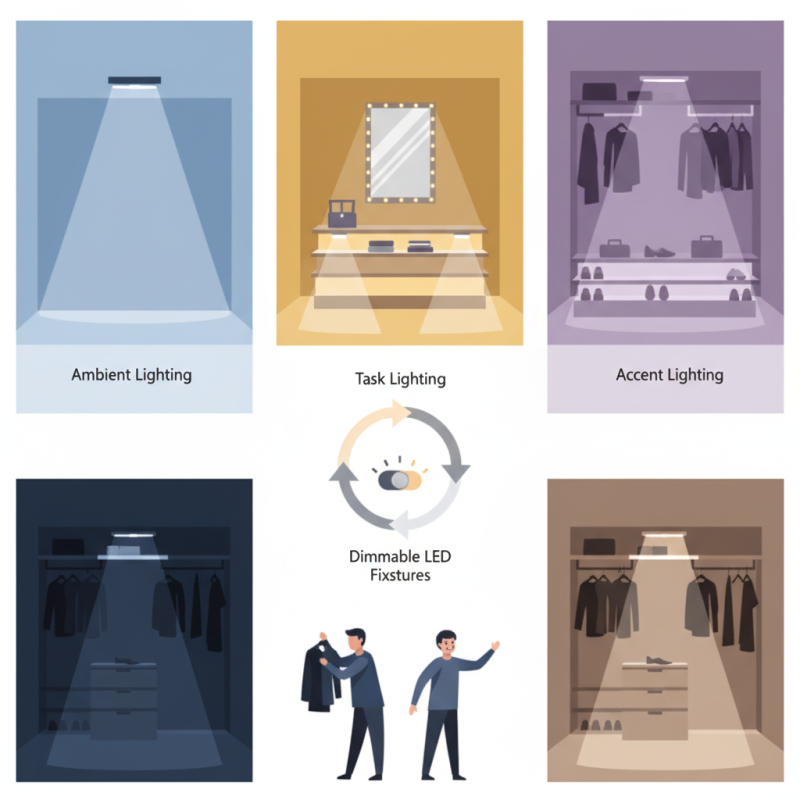
Walk-in closets are often a reflection of personal style. The right lighting can enhance the aesthetics and functionality of these spaces. According to the American Lighting Association, proper lighting increases visibility and creates ambiance. For walk-in closets, consider using a mix of ambient, task, and accent lighting to achieve a balanced look.
Ambient lighting serves as the foundation. Ceiling fixtures, recessed lights, or chandeliers can create a welcoming glow. Task lighting, such as LED strip lights, is ideal for illuminating specific areas like shelves or shoe racks. Accent lighting can highlight artwork or a feature wall, adding depth and interest.
Tips: Use warm white LED bulbs to enhance your closet's warmth. Aim for around 2700K to 3000K on the color temperature scale. Installing dimmers can allow you to adjust brightness according to your mood. Keep in mind the height and size of your closet. Too few fixtures can leave dark corners, while too many can create harsh shadows. Be mindful of balance to avoid overwhelming the space.
The color temperature of lighting can dramatically influence the ambiance in a walk-in closet. Warmer tones, around 2700K to 3000K, create a cozy and inviting space. These hues enhance the richness of colors in your wardrobe. They project a sense of warmth that can make the closet feel like a personal sanctuary. However, warmer lights can sometimes dull the appearance of certain fabrics, making it harder to distinguish shades.
On the other hand, cooler lights, like those around 4000K to 5000K, offer a more vibrant atmosphere. This type of lighting can enhance clarity and highlight textures. It makes every outfit appear sharp and well-defined. Yet, the starkness of bright light can feel clinical. It might take away from the relaxed feel that some people desire in their closets.
Finding the right balance is essential. Experimenting with different bulbs can lead to surprising results. Consider using a dimmer switch to adjust the intensity based on your needs. Reflect on what kind of atmosphere you want. Sometimes, mixing warm and cool lights yields the best results, allowing for versatility.
This chart illustrates the popularity of different color temperatures used in walk-in closets. As seen, Soft White (3000K) is the most preferred light for enhancing closet style, followed by Warm White and Cool White. Daylight and Bright White options are less chosen, indicating a preference for warmer hues that create a comfortable and inviting atmosphere.
Creating the perfect lighting for a walk-in closet is essential for both functionality and style. Layering lighting allows you to achieve a balance that highlights your wardrobe while providing adequate visibility. The combination of ambient, task, and accent lights is key.
Ambient lighting sets the overall tone. Use soft ceiling lights or recessed fixtures to eliminate shadows. This ensures a warm, inviting space. It’s crucial to choose a warm color temperature to create a cozy atmosphere.
Task lighting is about functionality. Installing focused lights near mirrors or shelves will help you see details when dressing. Wall-mounted sconces or LED strip lights can provide that clear visibility.
Accent lighting enhances the style. LED spotlights can be used to highlight favorite pieces or artwork. It adds a unique flair to your closet, transforming it into a stylish showcase.
Tips: Consider dimmable switches for versatility. Also, avoid relying solely on one type of light. A blend will bring depth and interest to the space. Assess your closet's layout. Each area deserves attention. This holistic approach creates a seamless flow and visually appealing environment.
When designing a walk-in closet, utilizing mirrors and reflective surfaces can dramatically enhance the lighting and style of the space. Mirrors can serve as both a functional and aesthetic addition. Placing a large mirror opposite a light source amplifies brightness. This effect can create an illusion of a more expansive area. It’s essential to think about the mirror's placement. Even small decorative mirrors can bring about a sense of depth.
Reflective surfaces do more than just bounce light around. They can highlight textures and colors of your wardrobe. Using glossy finishes on shelves or cabinets will not only uplift the overall look but also aid in illumination. Think about including metallic elements to add a touch of sophistication. Through trial and error, you may discover which surfaces work best for your closet's unique lighting needs.
However, achieving balance is crucial. Too many reflective surfaces can create a disorienting effect. A careful selection can help you avoid overwhelming the space. It's important to consider the overall theme and functionality of the closet. Natural and artificial lighting should coexist, enhancing both aesthetics and utility. Finding this harmony may require some adjustments, but the results are often worth the effort.
| Lighting Type | Description | Benefits | Recommended Placement | Mirror Use |
|---|---|---|---|---|
| LED Strip Lights | Flexible lighting that can be installed in various locations | Energy-efficient, customizable brightness | Under shelves, around mirrors, above hanging rods | Enhances ambient light when placed near mirrors |
| Chandeliers | Elegant lighting fixture that provides a focal point | Adds style and sophistication | Center of the closet for high ceilings | Reflects and spreads light across the space |
| Recessed Lighting | Flush-mounted lights that blend into the ceiling | Provides an unobtrusive lighting option | Evenly spaced around the ceiling | Helps eliminate dark spots when paired with mirrors |
| Wall Sconces | Wall-mounted fixtures that add character | Provides directed light and style | On side walls for accent lighting | Enhances visual depth near the mirrors |
| Natural Light | Light from windows or skylights | Creates a warm and inviting atmosphere | Near windows for maximum effect | Natural reflects well with mirrors |
Walk-in closets offer an opportunity for both style and functionality. Smart lighting solutions can elevate this space, creating an inviting atmosphere. LED strip lights are an excellent choice; they can be placed along shelves or inside cabinets. This type of lighting not only illuminates each corner but also adds a modern touch.
Motion sensor lights enhance efficiency by turning on automatically. Imagine entering your closet, and the lights greet you. It saves time and energy. Dimmers allow users to adjust brightness according to mood. Sometimes, soft lighting is perfect for a cozy feel, while bright lights work well for choosing outfits.
Consider using smart bulbs integrated with apps. These provide control over color and intensity from your phone. This customization can reflect your personal style. However, be mindful of potential technical issues. Relying too heavily on technology could lead to frustration. Finding the right balance between style, efficiency, and reliability is crucial for maximizing your walk-in closet's potential.
: The color temperature can greatly influence the ambiance. Warmer tones create a cozy feeling, while cooler tones enhance clarity.
Warmer tones, around 2700K to 3000K, are ideal. They create an inviting environment for your closet.
Yes, cooler lights (4000K to 5000K) make outfits appear sharper and highlight textures effectively.
Warmer lights can dull certain fabrics, making it harder to distinguish different shades.
Mirrors can amplify brightness and create the illusion of a larger space. Their placement is key.
Balance is crucial. Too many can be disorienting, but glossy finishes can enhance brightness and aesthetics.
Smart lighting adds both style and efficiency. Features like motion sensor lights and adjustable brightness increase convenience.
Overreliance on technology can lead to frustration. Technical issues may disrupt the seamless experience you desire.
Experimenting can lead to surprising results. Finding the right balance between warm and cool lights might boost your closet's appeal.
Dimmers allow you to adjust light intensity based on your mood. Soft lighting can create a cozy feel when needed.
When considering "What is the best lighting for walk-in closets," it's essential to focus on several key aspects. First, selecting the right type of lighting can greatly influence the overall style and usability of the space. Combining different types of lights, such as ambient, task, and accent lighting, helps to create a balanced and functional environment. Additionally, the color temperature of the lights can significantly affect the atmosphere, with warmer tones providing a cozy feel and cooler tones offering a more energizing ambiance.
Layering lighting strategies can be enhanced with the use of mirrors and reflective surfaces, which maximize light distribution and create a more spacious look. Furthermore, incorporating smart lighting solutions not only improves efficiency but also allows for customizable settings to match specific needs and preferences. By thoughtfully considering these factors, one can determine the best lighting options that enhance both the functionality and style of walk-in closets.
